Cork insulation inside
Edinburgh's Cold War bunker
A chance discovery at Barnton Bunker shows how remarkably well cork insulation can survive in a demanding environment.
Cork insulation inside Edinburgh’s Cold War bunker
A chance discovery at Barnton Bunker shows how remarkably well cork insulation can survive in a demanding environment.
A chance discovery
I recently had the opportunity to spend some time inside Barnton Bunker in Edinburgh, although the reason I was there had nothing to do with historic insulation.
I was at the bunker to provide practical training in the application of Isolocork Spray cork to Benjamin Mitchell of Lothian Plaster Ltd.
The spray cork was being used to address one of the internal brick walls where there were mould issues. Unlike some other areas of the bunker, this particular wall did not have cork board insulation.
During the training, Ben and I naturally got talking about cork, its properties and the benefits of using it as an insulation material.
That was when Ben mentioned something I wasn't expecting.
There were already cork insulation boards inside the bunker.
Ben invited me to have a look, and together with Rob I was given a quick tour of the building.
What I saw was remarkable.
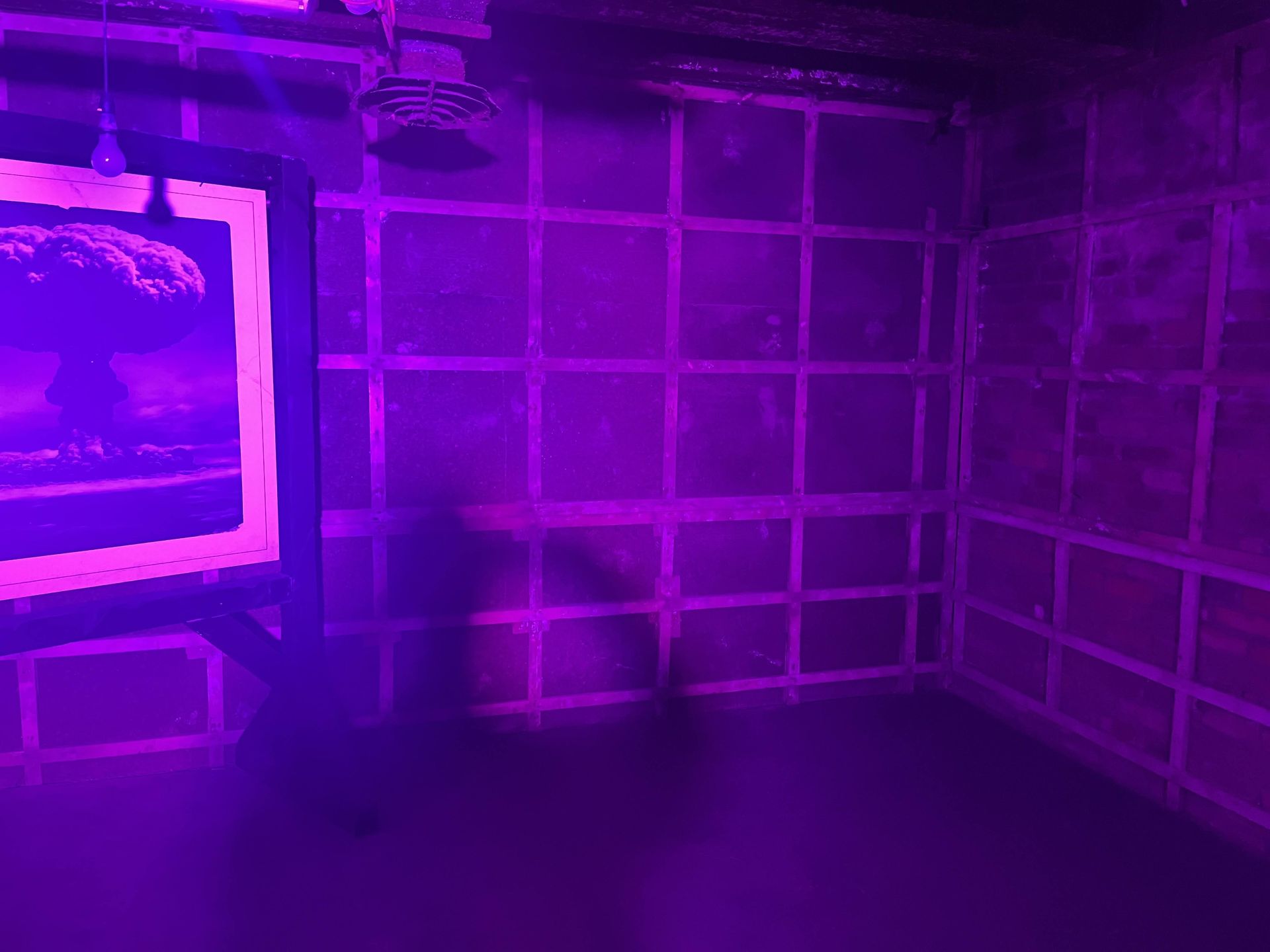
Cork hidden inside the bunker
Behind the internal timber framework were large areas of cork insulation board.
And they were very well preserved.
Looking closely at exposed and damaged sections, the cork was immediately recognisable. The material had retained its structure and there was no obvious sign of the cork itself having rotted away.
For someone working with cork insulation today, seeing this material still sitting within the fabric of such a historic building was fascinating.
This wasn't a sample in a laboratory or a modern demonstration wall.
It was cork insulation inside a building that has experienced decades of use, changing functions, abandonment, fires, moisture and deterioration.
And substantial areas of the cork remain in place and remarkably well preserved.
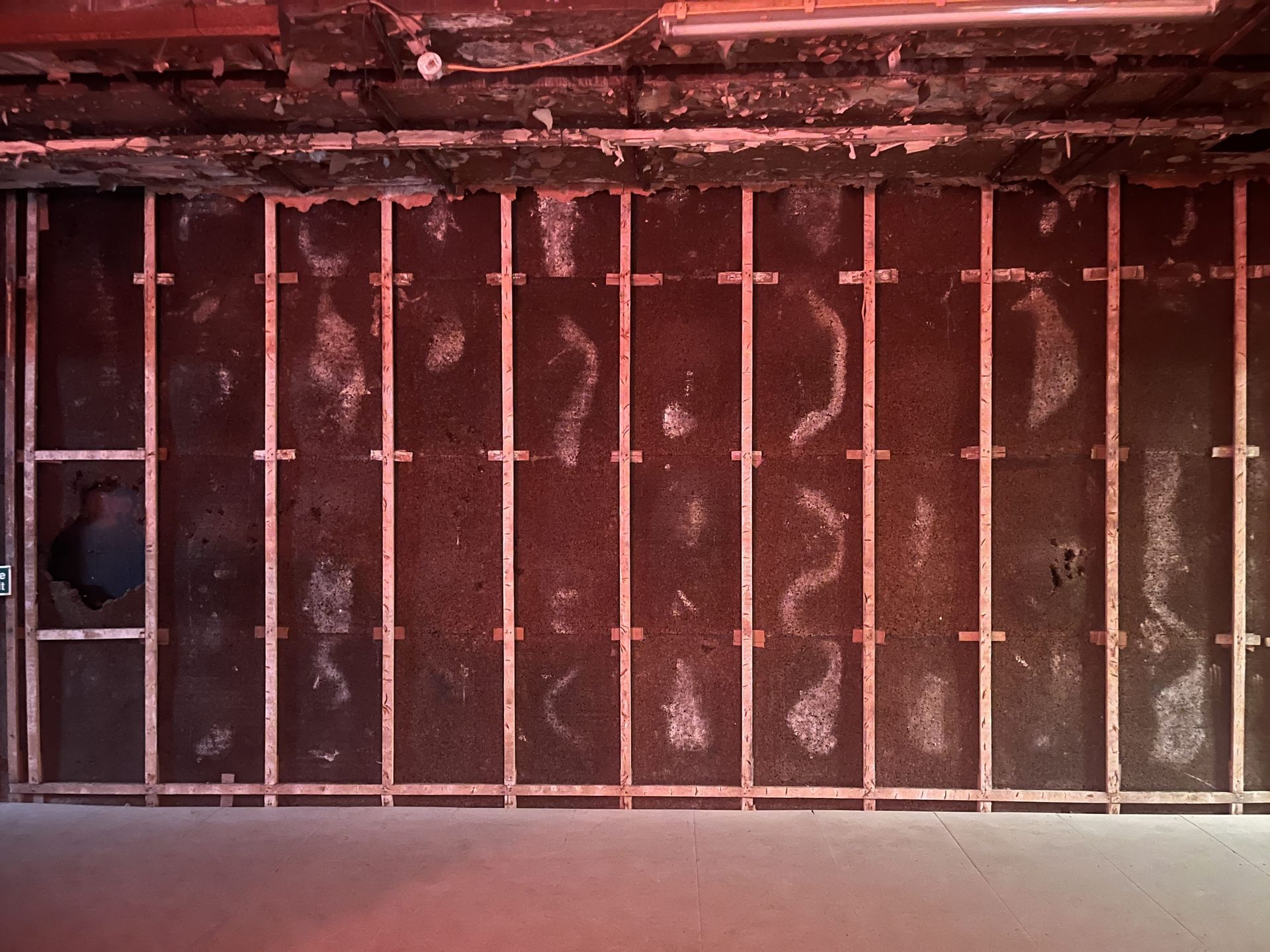
A small part of an extraordinary building
The context makes the discovery even more interesting.
Barnton Bunker played a role in Britain's defence infrastructure during both the Second World War and the Cold War.
The site originally included an RAF Fighter Command Operations Room. Then, between 1951 and 1953, a much larger three-level underground bunker was constructed as part of the secret ROTOR programme, becoming Scotland's Sector Operations Centre.
It was designed to help monitor Scottish airspace and coordinate responses to the threat posed by Soviet aircraft during the early Cold War.
Later, the complex was adapted for civil defence and emergency government functions.
The bunker eventually became surplus to requirements and was sold in the early 1990s. It subsequently suffered years of neglect, vandalism, material theft and serious fire damage.
Today, the Barnton Bunker Preservation Society is undertaking the enormous task of restoring and preserving this important part of Scotland's history.
Against that background, finding substantial areas of cork insulation still in place is particularly striking.
What can an old bunker teach us about insulation today?
For me, this is where the story becomes relevant to modern construction.
Cork has been used as an insulation material for generations, and here we have a physical example sitting inside a historic Cold War structure.
Scotland is not an easy environment for building materials.
We have long heating seasons, low temperatures, high humidity, driving rain and buildings that can experience significant moisture challenges.
The conditions inside a disused underground bunker can be particularly demanding.
Yet the cork I saw at Barnton had maintained its physical structure remarkably well.
That matters when we consider one of the challenges facing construction today:
How do we improve the thermal performance of our buildings while reducing embodied carbon and our dependence on fossil-derived insulation materials?
Many modern insulation systems rely heavily on petrochemical products such as polyurethane and other plastic foams.
These products have their place, but they should not automatically be considered the only solution.
Cork gives us another option.
It is a renewable material harvested from the bark of the cork oak without cutting down the tree. It can provide thermal and acoustic insulation while also being suitable for vapour-open construction approaches.
And importantly, cork is not an experimental new material.
Its use in buildings has a long history.
The walls at Barnton provide a very tangible reminder of that.
Old material, modern relevance
What I found particularly interesting about the visit was the connection between the old and the new.
I had gone into Barnton to train an applicator in the use of Isolocork Spray cork as part of an approach to a mould-affected brick wall.
Then, only a short distance away, I found another form of cork that had already been used within the building as insulation.
Different cork products.
Different applications.
Different periods.
But the same basic material.
Today we have expanded cork insulation boards, cork-based coatings and other systems that allow us to use the properties of cork in both new construction and retrofit.
We are also facing a building stock that urgently needs to become warmer and more energy efficient, while at the same time reducing the environmental impact of the materials we use to achieve that.
Sometimes innovation means developing something completely new.
But sometimes it means looking again at materials that have already demonstrated what they can do.
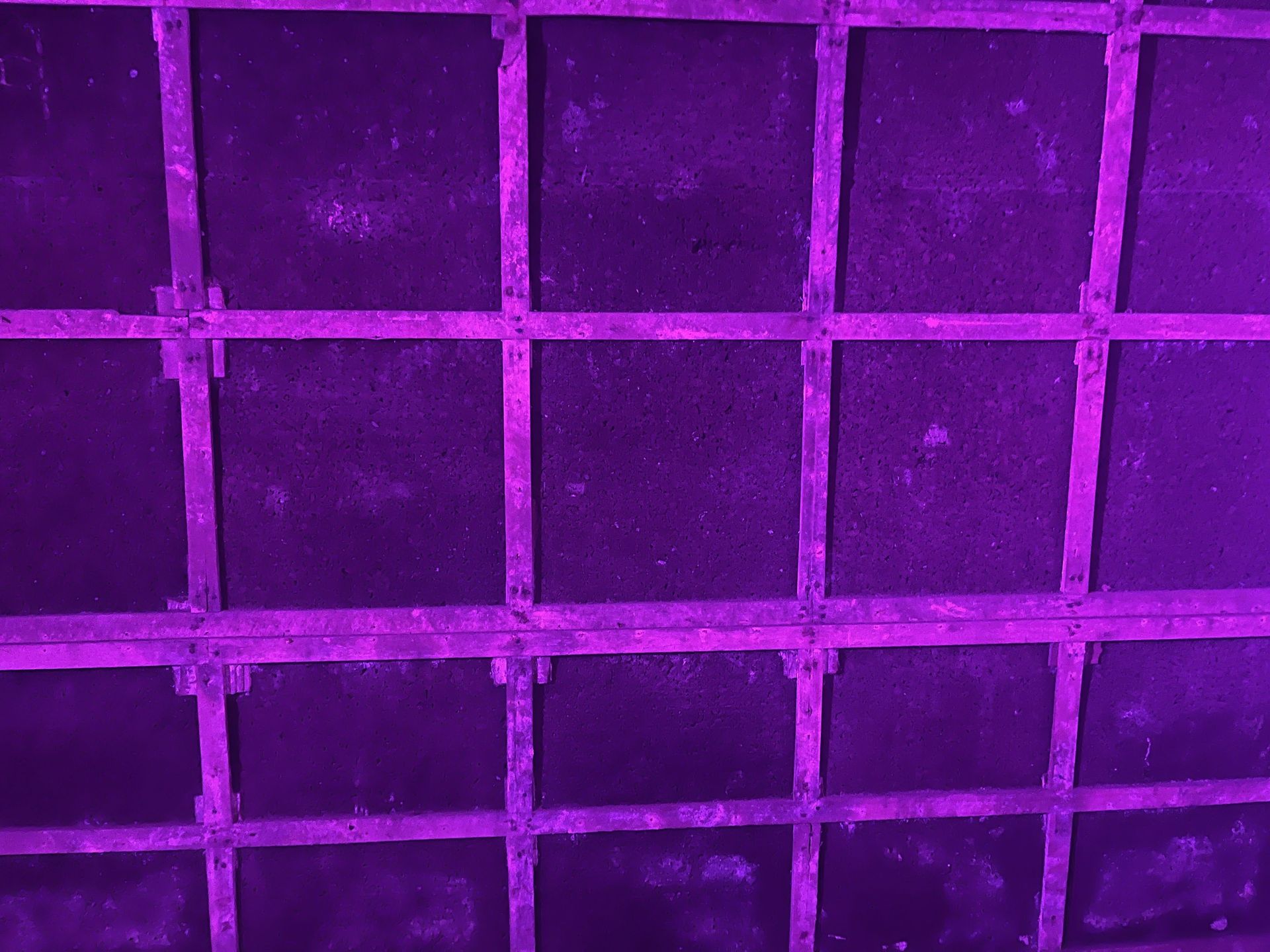
Seeing it for myself
Photographs tell part of the story, but standing in front of those walls made the point much more strongly for me.
You can see the age and history of the surrounding building.
You can see areas that have suffered damage.
And amongst all of that, substantial sections of cork insulation remain.
For CorkEco Solutions, our work is focused on bringing cork-based solutions back into the conversation around retrofit, insulation and building performance.
Seeing cork preserved inside a structure like Barnton reinforces why I believe it deserves serious consideration when we're looking for alternatives to insulation derived from petroleum and other fossil resources.
A material doesn't need to be new to be relevant to the challenges we face today.
Sometimes the evidence has been sitting inside the walls for years.
My thanks to Benjamin Mitchell, the Barnton Bunker Preservation Society and Rob for taking the time to show me around and allowing me to see this fascinating example first-hand.